
Here is how to sew ruffles the right way, with steps that every beginner will love to know before starting!
Learning how to sew ruffles is one of the easiest ways to add volume and a pretty detail to your sewing projects. In this beginner-friendly guide, we’ll walk you through the basic steps and a few practical tips to help you get neat, even ruffles without the frustration.
Why Ruffles Take a Little Practice
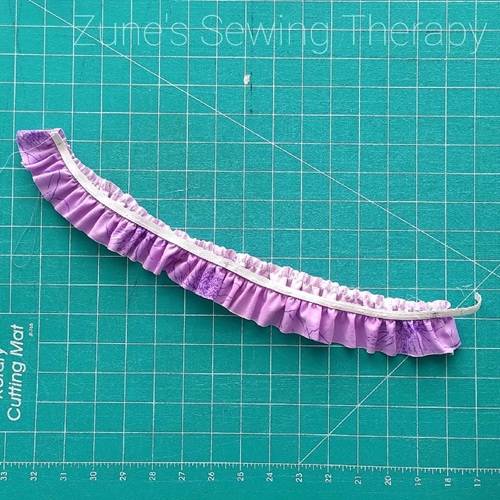
A ruffle is simply a longer piece of fabric gathered onto a shorter edge. The extra fabric is pulled into small folds, creating that fuller look.
And the tricky part isn’t actually sewing the ruffle; it’s getting those folds evenly spread instead of having them bunch up in one spot.
Well, the good news is that you don’t have to be an expert to get a great result. With the right amount of fabric and a steady hand while pulling your gathers, you can get full, even ruffles on your very first try.
Choose the right fabric for your ruffle: Lightweight and medium-weight woven fabrics, such as cotton, cotton lawn, and linen blends, are good choices for beginners because they gather easily without becoming too bulky.
What You’ll Need to Sew Ruffles
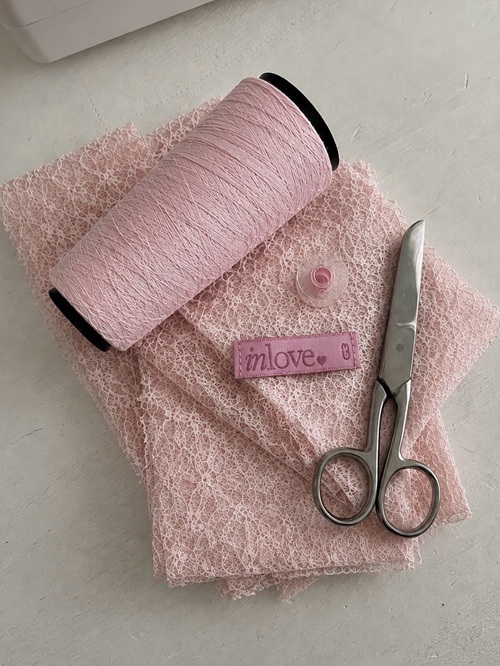
A few supplies are fabric scissors, a measuring tape, matching thread, pins or clips, a fabric marker, and an iron. Keep a hand-sewing needle nearby, too; it comes in handy!
Next, decide how full you want your ruffle to look before you cut anything. Yes, don’t just guess the fabric width before you start.
For a moderate ruffle, use about twice the length of the edge you’re attaching it to. For a fuller ruffle, use 2½ to 3 times the finished length. Lightweight fabrics can usually handle more fullness, while thicker fabrics often look better with a lower ratio.
How to Sew Ruffles in 6 Easy Steps
1. Decide How Full You Want Your Ruffle
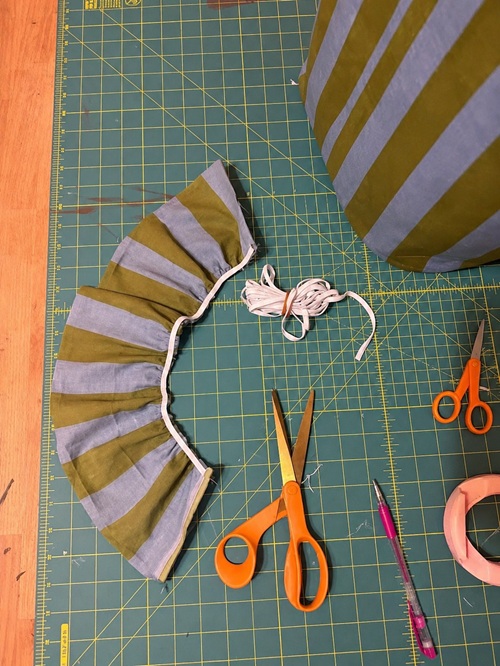
Start by measuring the edge where the ruffle will go. This could be the bottom of a skirt, the edge of a sleeve, or the side of a pillow.
Now multiply that measurement by your chosen gather factor.
For example, if your finished edge is 20 inches long, a 2:1 ratio means you’ll need about 40 inches of fabric for the ruffle.
The more fabric you use, the fuller your ruffle will look. For a first project, twice the finished length is a good place to start.
2. Cut and Prepare The Fabric
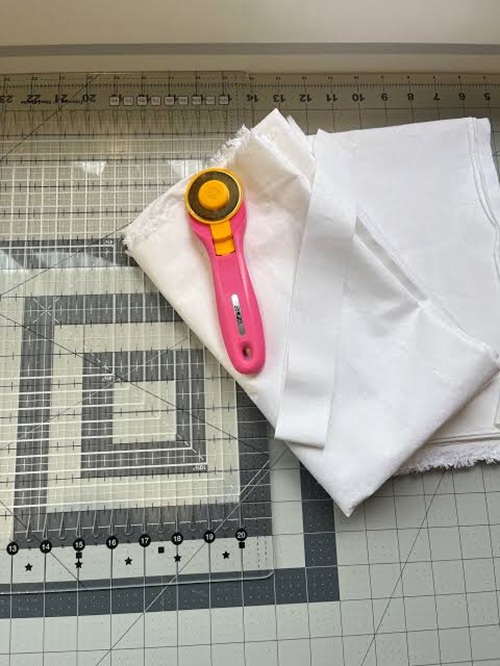
Cut a long strip of fabric using the length you calculated. Then decide how deep you want the finished ruffle to be.
For example, if you want your ruffle to be 2 inches wide when finished, cut the strip wider to leave room for the seam allowance and finished edge.
Before gathering, finish the raw edge if needed. You can fold and press it under, sew a narrow hem, or use a serger. A neatly finished edge will give your ruffle a cleaner look and prevent fraying.
Quick Advice: Wash and dry your fabric according to its care instructions before cutting, especially if the finished project will be washed later.
3. Sew Two Basting Lines
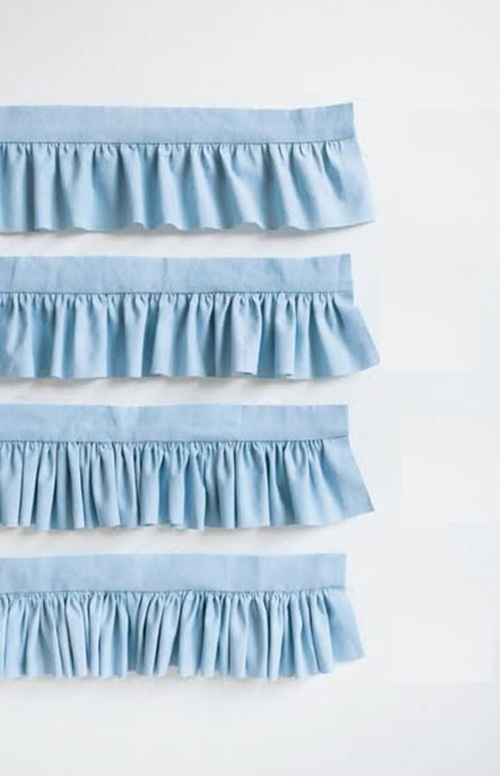
Set your sewing machine to its longest straight stitch and turn off automatic thread cutting. Then, sew two parallel lines along the edge you’ll gather, keeping both lines inside the seam allowance.
Make sure not to backstitch at either end. Instead, leave a few inches of thread hanging loose. You’ll need these thread tails to gather the fabric.
Why two lines? If one gathering thread breaks while you’re pulling, the second line can help keep your gathers from completely falling apart.
4. Gather the Fabric
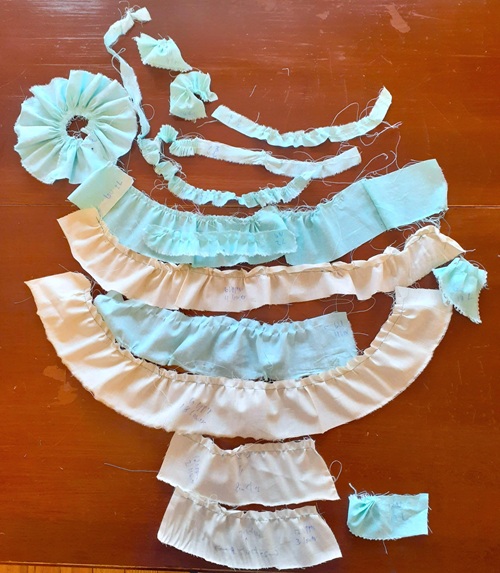
Start at one end and gently pull the bobbin threads from your basting stitches. As you pull, push the fabric along the thread to create small gathers.
Don’t try to gather the entire strip in one go. Work on a few inches at a time, then slide the gathers along the thread before continuing.
For a long ruffle, try gathering from both ends toward the center. This puts less stress on the thread and makes a long strip easier to control.
Quick Hack: If the thread feels stuck, don’t yank it. Loosen the fabric around the stitches and try again. Pulling too hard is one of the easiest ways to snap your gathering thread.
5. Even Out and Secure the Gathers
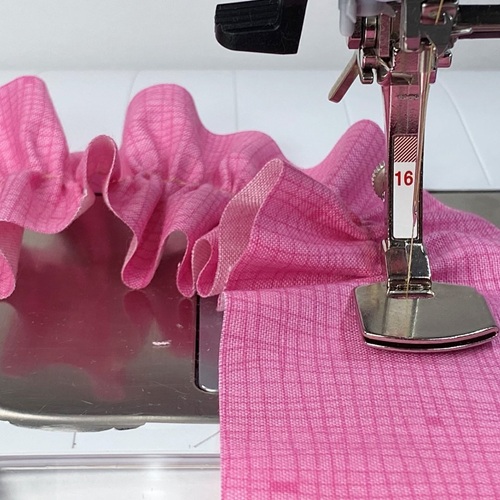
Once your ruffle is close to the right length, spread the gathers evenly with your fingers. You don’t want one end packed tightly while the other end is almost flat.
Here’s an easy trick: Before gathering, divide both your ruffle and the fabric edge into four or six equal sections and mark them lightly. Match these marks when you attach the ruffle. This helps distribute the fullness much more evenly.
When you’re happy with the gathers, tie off the loose threads or wrap them around a pin so they don’t loosen while you’re sewing.
6. Attach the Ruffle and Finish It
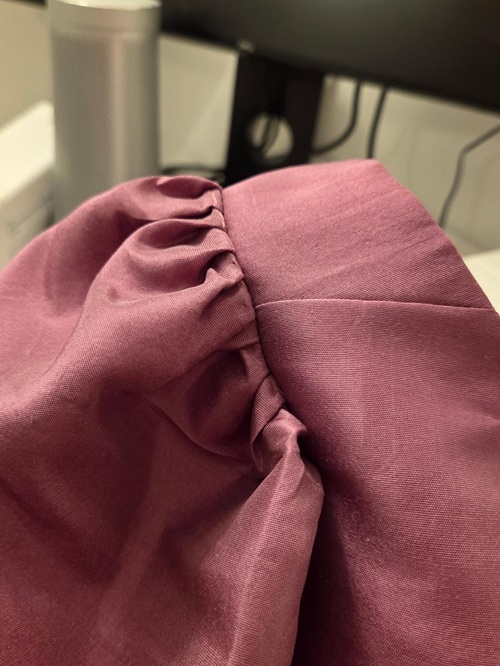
Place the gathered edge of the ruffle against the edge of your main fabric, with the right sides facing each other. Match the center points and section marks first, then adjust the gathers between them.
Pin or clip the ruffle in place and sew slowly along the seam allowance. Use your fingers to gently spread or tighten the gathers as needed while you sew.
Once you’ve attached the ruffle, remove any visible basting stitches and give the finished seam a light press. Press around the gathers rather than flattening them, so the ruffle keeps its shape.
Bonus: Want Crisp Ruffles? Try Pleats Instead
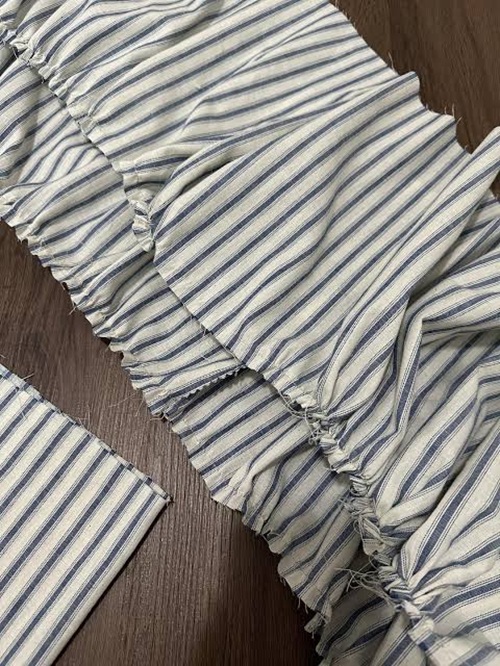
If you want a ruffle that looks more structured and less soft, try pleating the fabric instead of gathering it.
Mark evenly spaced sections along the fabric, fold each section in the same direction, and press the folds to keep them crisp. Baste the pleats in place before attaching them to your project.
Gathers give you a soft look, while pleats create a cleaner and more tailored finish.
What Is a Gather Factor
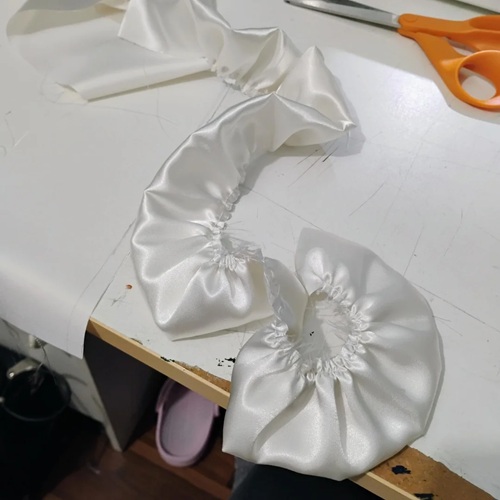
A gather factor is simply the number you multiply your final length by to figure out how much fabric to cut before gathering. The gather factor of two gives you a moderately full ruffle, while three gives you a fuller, more dramatic one.
Interested in learning about it in the next tutorial? Leave us a comment if you do!
Few Ruffle Sewing Mistakes To Avoid
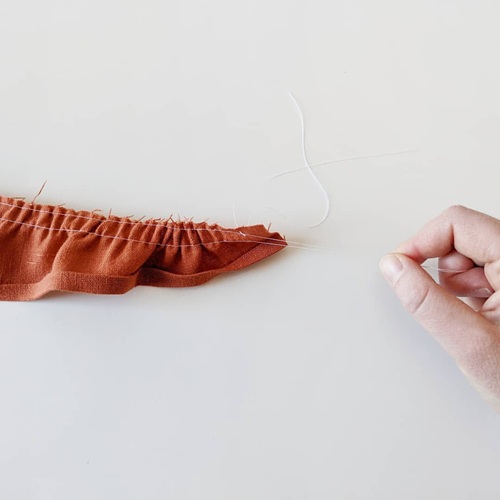
Don’t skip turning off auto thread cutting before you gather! This is the first thing to keep in mind. And yes, without those long thread tails to hold onto, you’ll have nothing left to pull once your basting stitches are in.
If you’re gathering a long edge, work in sections instead of pulling the whole thing at once.
Next, do keep two lines of basting stitches instead of one. A single thread snapping partway through gathering can undo all your progress, while a second line gives you a backup.
Lastly, choose your gather factor based on your fabric. A lightweight fabric cut at only two times your final length can end up looking flat. Instead of full, match the ratio to the fabric you’re using.
Sewing ruffles isn’t complicated; it just rewards a little patience. And we think you’re just on the right path now! Stay tuned for more helpful lessons like these and check out this beginner’s guide on how to start sewing.